Facing Deportation for Visa Overstay Since Age Four
A woman adopted from Iran at the age of two, who grew up in the U.S. with the family of a former Air Force serviceman, faces the risk of deportation back to Iran — the country she left as an orphan and where Christians face severe danger.
The U.S. Department of Homeland Security sent her a letter requesting her appearance in immigration court in California to initiate deportation proceedings. She has no criminal record. The reason stated in the letter: she overstayed her visa from March 1974, when she was only four years old.
The Associated Press (AP) is not publishing her name due to the sensitive legal situation.
"I never thought it would get to this point. Being sent back to Iran — as a Christian and the daughter of a U.S. Air Force officer — could be equivalent to a death sentence."
Legal Loophole Between Adoption and Immigration Laws
She is among thousands of internationally adopted children who were never naturalized due to a legal gap between adoption and immigration laws. Her adoptive parents completed the adoption process in 1975, but at that time, parents had to complete a separate naturalization process for their adopted children. She only discovered she wasn't naturalized when she applied for a passport at age 38.
She found a 1975 lawyer's letter in her father's papers indicating work with immigration authorities and that "this matter appears to be concluded." Both of her adoptive parents have since passed away.
Years Spent Seeking to Legalize Her Status
For years, she sought to legalize her status, contacting the State Department, immigration agencies, and senators. The office of Representative Young Kim in California responded that they could not intervene.
Her initial hearing, scheduled for March 4th, was moved to next month. The judge agreed that she does not need to appear in person, reducing the risk of arrest at court.
Decades-Long Legal Loophole
In 2000, the U.S. Congress passed a law granting automatic citizenship to internationally adopted children, but it was not applied retroactively and only applied to those under 18 at the time the law came into effect. Individuals born before February 27, 1983, are not covered by this provision.
A bipartisan coalition — ranging from Southern evangelical organizations to liberal immigration groups — has lobbied Congress to amend the law for years, but without success.
Hannah Daniel, who previously served as public policy manager for the Ethics & Religious Liberty Commission of the Southern Baptist Convention, called the situation "unbelievable" and "un-American."
Risks for Christians in Iran
Ryan Brown, CEO of Open Doors, stated that converts from Islam to Christianity in Iran are considered enemies of the state. They are frequently arrested, and many are sentenced to death. Prison conditions are dire, especially for women.
"There is no benefit of the doubt given."
The woman does not speak Farsi, is unfamiliar with Iranian customs, and has lived her entire life as a U.S. citizen. She fears that her father's military past could further fuel suspicions against her.
Legacy of Her POW Father
Her father was a prisoner of war in Germany during World War II, captured in 1943 and held until the war's end. After his discharge, he worked as a government contractor in Iran, where he and his wife found her in an orphanage in 1972 and brought her to the U.S. in 1973.
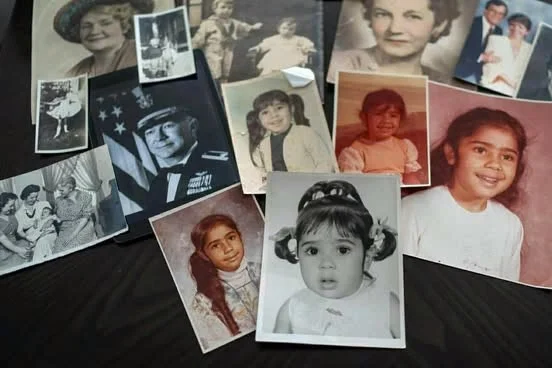
When she feels afraid, she looks at a photo of her father in his military uniform, medals pinned to his left shoulder.
"I am proud of my father's legacy. I am a part of that legacy. What is happening to me is wrong. If my father were alive, this would break his heart."