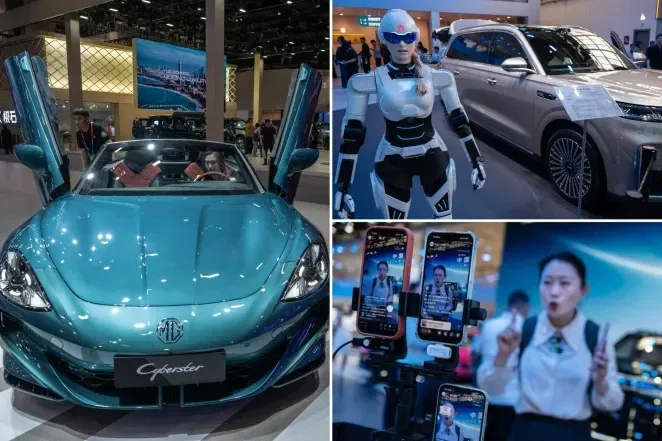
A wave of affordable Chinese-made electric vehicles (EVs) and SUVs is increasingly appearing in California via Mexico, prompting several U.S. lawmakers to raise alarms over data security, technology, and the impact on the American automotive industry.
According to the California Post, dealerships in Mexican border cities like Tijuana are currently selling Chinese electric and hybrid models for around $20,000—significantly lower than the price of new vehicles in the United States.
Brands such as:
BYD
MG
Chirey
are reportedly beginning to appear on the streets of Southern California, particularly near the border region.
Many Reddit users have noted that Mexican residents living in Tijuana but working in San Diego can relatively easily drive these vehicles into the U.S. under "temporary use" status.
According to U.S. Customs and Border Protection (CBP), current laws allow non-residents to drive vehicles that do not meet U.S. emissions or safety standards across the Canadian or Mexican borders for temporary purposes, such as tourism or commuting, provided they are not officially imported into the U.S. market.
The National Highway Traffic Safety Administration (NHTSA) also confirmed that these vehicles are not currently considered official imports and are therefore not required to meet full U.S. standards.
However, many U.S. lawmakers now want to close this "border loophole."
John Moolenaar, Chairman of the House Select Committee on the Chinese Communist Party, along with Representative Debbie Dingell, stated they will introduce a bill this month aimed at banning Chinese vehicles from operating in the U.S.
The two lawmakers declared:
“Every car on American roads today is a mobile data-gathering device.”
Meanwhile, Senator Elissa Slotkin warned that Chinese vehicles could collect location data, video, and maps around critical infrastructure or U.S. military bases.
She also expressed concern that connected technologies like Bluetooth could pose risks of remote access or external manipulation.
According to the California Post, California authorities currently have almost no tracking of the number of these vehicles after they enter the U.S. because:
The DMV does not manage which vehicles are allowed entry,
The CHP does not have the authority to control cross-border vehicles.
The debate currently revolves not only around the low price of Chinese cars but also involves:
data security,
industrial competition,
and foreign technology operating on U.S. soil.