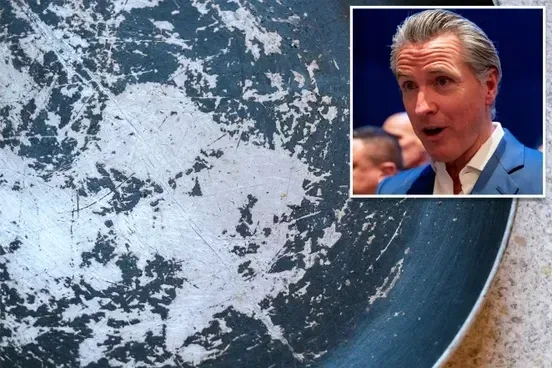
New York lawmakers are pushing a bill to ban the sale of non-stick cookware containing PTFE—a compound in the PFAS group, commonly known as “forever chemicals.” Meanwhile, California Governor Gavin Newsom once vetoed a similar bill in his state, arguing that the proposal would increase costs and disadvantage consumers.
PTFE (polytetrafluoroethylene) belongs to the group of per- and polyfluoroalkyl substances (PFAS)—synthetic compounds criticized for their environmental persistence. However, the U.S. Food and Drug Administration (FDA) has for decades approved the use of these compounds in non-stick pan coatings.
The New York bill is sponsored by Senator Peter Harckham (D-Westchester) and Assemblymember Deborah Glick (D-Manhattan). The state Senate passed it on February 10, though the Assembly has not yet put it to a vote. If enacted, cookware containing PFAS could be removed from store shelves starting in early 2028.
The proposal targets not only cookware but also extends to certain architectural paints, car parts, cleaning products, carpets, ski wax, and polishes.
Governor Gavin Newsom vetoed a similar bill in California last fall. In his veto message, he expressed concern that the broad removal of products from the market would reduce affordable options for consumers and lead to economic consequences.
The cookware manufacturing industry is lobbying against the New York bill. Steve Burns, President of the Cookware Sustainability Association, argued that non-stick coated products are “100% safe” and have been repeatedly approved by the FDA since the Kennedy administration. He noted that the compounds used in non-stick pans are also used in the coatings of pacemakers.
Supporters of the bill counter that the primary goal is to protect public health and drinking water supplies. Assemblymember Deborah Glick cited the water system in Rockland County, where some wells recorded PFAS levels exceeding 10 parts per trillion (ppt), now requiring the installation of million-dollar filtration systems to treat the contamination.
She emphasized that merely addressing the aftermath is insufficient; the state needs to reduce the sources of PFAS and gradually phase out products containing these compounds from the market.