
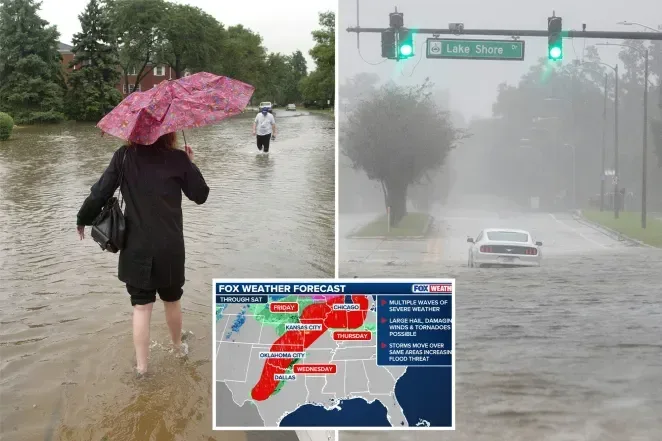
USA — More than 52 million people in the Plains, Midwest, Ohio Valley, and Mid-Atlantic are under warnings for heavy rain, strong winds, and flash flooding as a multi-day storm system begins in early April.
This storm surge comes right at the start of April — the beginning of the peak thunderstorm season in the Central United States.
Jet Stream and Warm Air Fueling Storms
According to the National Weather Service, a western jet stream is pushing a series of thunderstorm systems across the U.S.
Rising temperatures across much of the East are increasing atmospheric moisture, creating conditions for severe thunderstorms and hail to develop extensively.
Previously, on March 31, many areas in Iowa and Illinois recorded large hail, while strong wind gusts occurred in Ohio, Pennsylvania, and New York.
Risk of Large Hail, Strong Winds, and Tornadoes
NOAA’s Storm Prediction Center has issued a Level 3 out of 5 warning for the following areas:
Kansas Oklahoma North Texas
Thunderstorms are expected to form from afternoon into evening, with the potential for large hail and damaging wind gusts. Residents are advised to be particularly vigilant, as a violent tornado in Oklahoma previously caused significant loss of life and property damage.
Prolonged Heavy Rain Increases Flash Flood Risks
High moisture levels mean rain could last for several consecutive days, increasing the risk of flash flooding in:
Eastern Kansas Western Missouri Northern Oklahoma
Forecasts suggest some areas could see rainfall totals exceeding 150 mm by the end of the week.
Storm Systems Continue to Move
Storm systems will move toward the Midwest on April 2, affecting the Chicago area and posing a risk of major damage in Illinois and surrounding regions.
By April 3, a new round of thunderstorms will form in the Plains and Midwest, bringing risks of strong winds, hail, and tornadoes.
Prolonged Rain in the Mid-Atlantic
In the Ohio Valley and Mid-Atlantic, rain and thunderstorms will persist for several days, particularly in:
Pennsylvania West Virginia Maryland
These areas may experience repeated rounds of rain and strong winds, similar to the severe thunderstorms sweeping through North Georgia recently recorded.