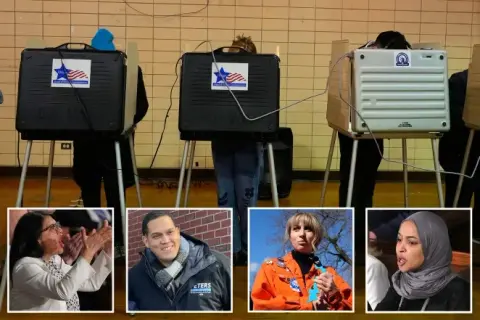
On March 18, 2026, a UC Berkeley/LA Times poll shows the California gubernatorial race leaning clearly toward the Republican Party, with the two leading candidates both hailing from the GOP.
Steve Hilton holds approximately 17%, followed by Chad Bianco at 16%. Meanwhile, the field of Democratic candidates is fragmented, with no single candidate exceeding 13% in a climate where Democrats hold lower favorability ratings than their opponents in several key regions.
Major names such as Eric Swalwell, Katie Porter, and Tom Steyer remain at low polling levels, failing to separate themselves from the pack.
Approximately 16% of voters remain undecided, indicating that the race is still open, but also reflecting a disconnect between candidates and the electorate—a departure from the winning formulas for the Republican Party often cited by political observers.
The primary challenge lies in California's "top-two" system: the two candidates receiving the most votes advance to the general election, regardless of party affiliation. Given the current situation, a scenario where two Republicans face off in the final round is a distinct possibility.
The Republican side has maintained a lean lineup, concentrating their votes. In contrast, the Democrats have spread their support across numerous candidates, with each holding a small fraction—not enough to create momentum, even as policies targeting California billionaires are being aggressively promoted.
To put it bluntly: it is not necessarily that the GOP is overwhelmingly strong, but that the Democrats are weakening themselves. Unless they consolidate their field and unite their vote, they risk being eliminated in the primary—in a state long considered their "stronghold."