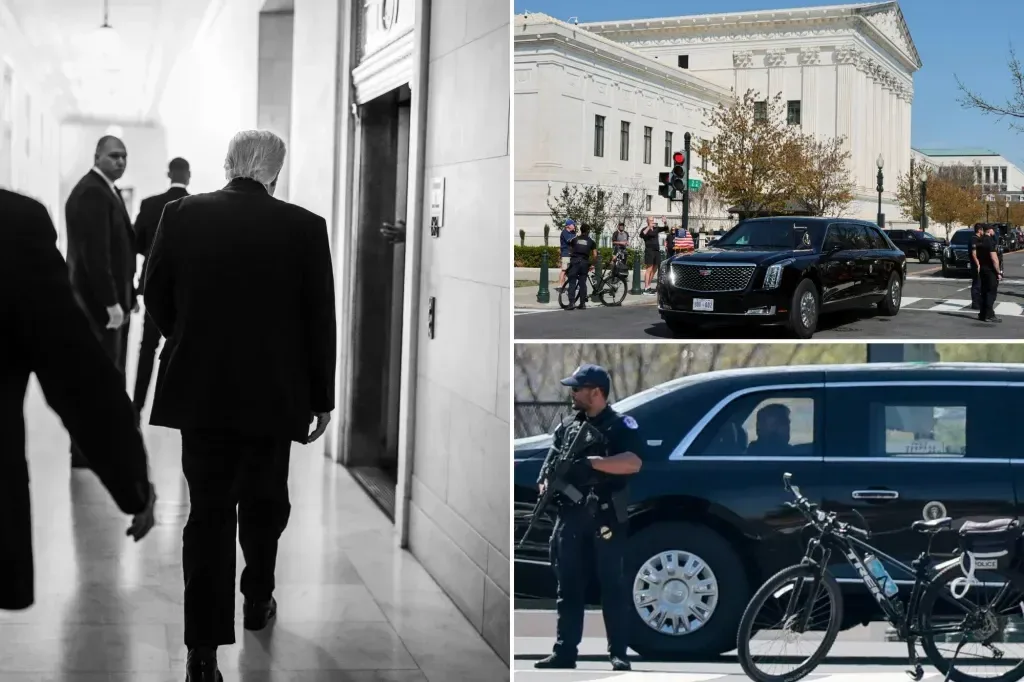
WASHINGTON — President Trump was personally present at the U.S. Supreme Court on April 1 to observe oral arguments regarding an executive order restricting birthright citizenship—one of the most significant legal issues of the current term.
President Trump sat in the front row of the public gallery, alongside Attorney General Pam Bondi, listening to Solicitor General John Sauer present arguments in defense of the administration’s executive order.
The order aims to end the automatic granting of U.S. citizenship to children born to undocumented immigrants or those on temporary visas, such as tourists and students.
Arguments Centered on the 14th Amendment
The core issue of the case lies in the interpretation of the Citizenship Clause of the 14th Amendment—which stipulates that all persons born in the U.S. and “subject to the jurisdiction thereof” are recognized as citizens.
The Trump administration argues that this clause has long been misinterpreted and should not apply to the children of illegal immigrants.
President Trump Exits Early, Reacts Sharply
President Trump left the courtroom before the conclusion of the hearing, just as American Civil Liberties Union attorney Cecilia Wang began presenting arguments against the order.
After returning to the White House, President Trump posted a blunt reaction on Truth Social:
“We are the only country in the world so stupid as to allow Birthright Citizenship!”
No Video, Audio-Only Hearing
Under longstanding U.S. Supreme Court rules, no cameras or photography are allowed in the courtroom. Only the audio of the hearing was broadcast live, and only the justices and attorneys were permitted to speak.
Despite President Trump’s presence, the justices did not mention or react to his attendance, proceeding immediately into the questioning phase.
A Rare Historical Milestone
President Trump’s direct attendance at the arguments marks the first time a sitting president has appeared at the Supreme Court during a proceeding.
This move comes amid tensions between President Trump and the court, particularly after the court previously rejected his earlier tariff plan.