Nuclear talks in Geneva reach a deadlock
The round of negotiations between the US and Iran in Geneva ended on February 26 without reaching any agreement regarding the nuclear program. The discussion, which lasted over six hours mediated by Oman, failed to produce the expected breakthrough. The Iranian delegation continued to assert its right to nuclear development and demanded that Washington completely lift economic sanctions.
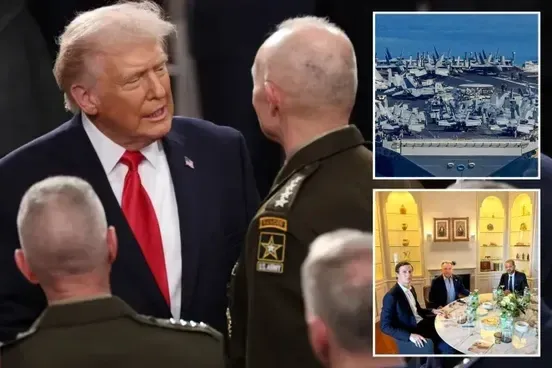
In his recent State of the Union address, President Donald Trump stated that Iran expressed a desire to reach a deal, but they have yet to make the most crucial commitment. He emphasized that Washington needs to hear an assurance that Tehran will never possess nuclear weapons, especially as Iranian missiles could reach US territory in the future. Currently, technical exchanges are expected to continue in Vienna early next week.
US increases military presence to record levels
Parallel to diplomatic efforts, the US has deployed more powerful military assets to the Middle East ahead of the President's deadline. The aircraft carrier USS Gerald R. Ford has left Crete to head toward waters near Israel, while the USS Abraham Lincoln carrier strike group maintains its position in the Arabian Sea. The total number of US fighter jets in the region has now exceeded 200, including recently deployed modern F-35 fighters.
Military analysts suggest this is the largest buildup of US forces in the Middle East without an active invasion since the 2003 Iraq War. Sources claim that US forces in the Middle East are ready for high-intensity operations if directly ordered by the Commander-in-Chief. This move aims to exert maximum pressure on Tehran as negotiations flounder. The US demands that Iran dismantle key nuclear facilities such as Fordow, Isfahan, and Natanz, and transfer all enriched uranium to Washington.
US public opinion divided over risk of conflict
While the administration tightens its military grip, the American public is expressing concern over a potential new war. According to a survey by Economist/YouGov, up to 49% of Americans oppose an attack on Iran, while only 27% support direct military action. Another poll by Quinnipiac recorded an opposition rate as high as 70% last month.
President Trump asserted that he still prioritizes a peaceful diplomatic solution to the Iranian nuclear issue. However, he also clearly stated that all military options remain on the table to prepare for any eventuality. A final decision on the next steps regarding Tehran is expected from the White House in the coming days, as experts warn that Iran has only one week left to reach bomb-grade material. Given the situation, the US reaffirmed that the threat from Iran cannot persist much longer without a change in attitude from Tehran.