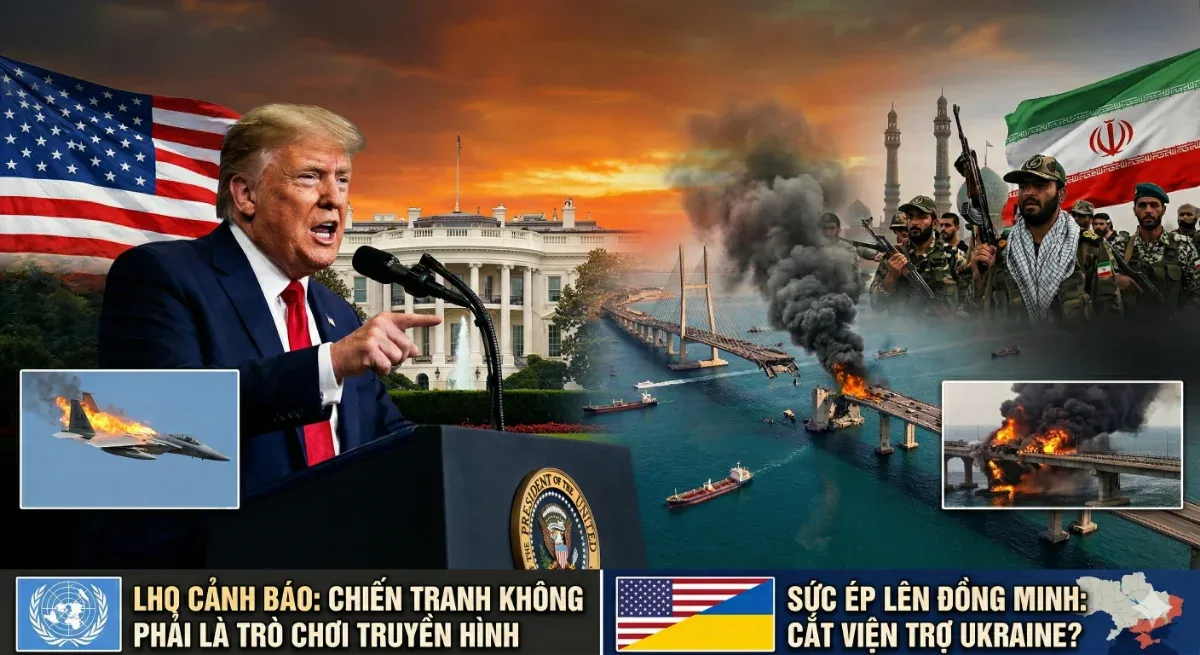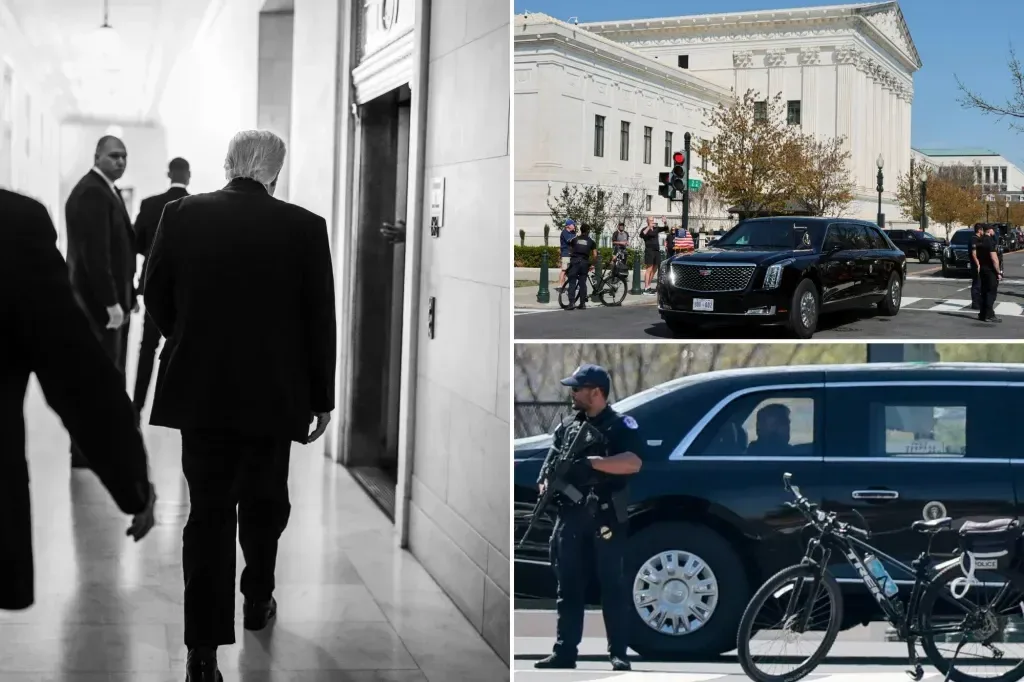
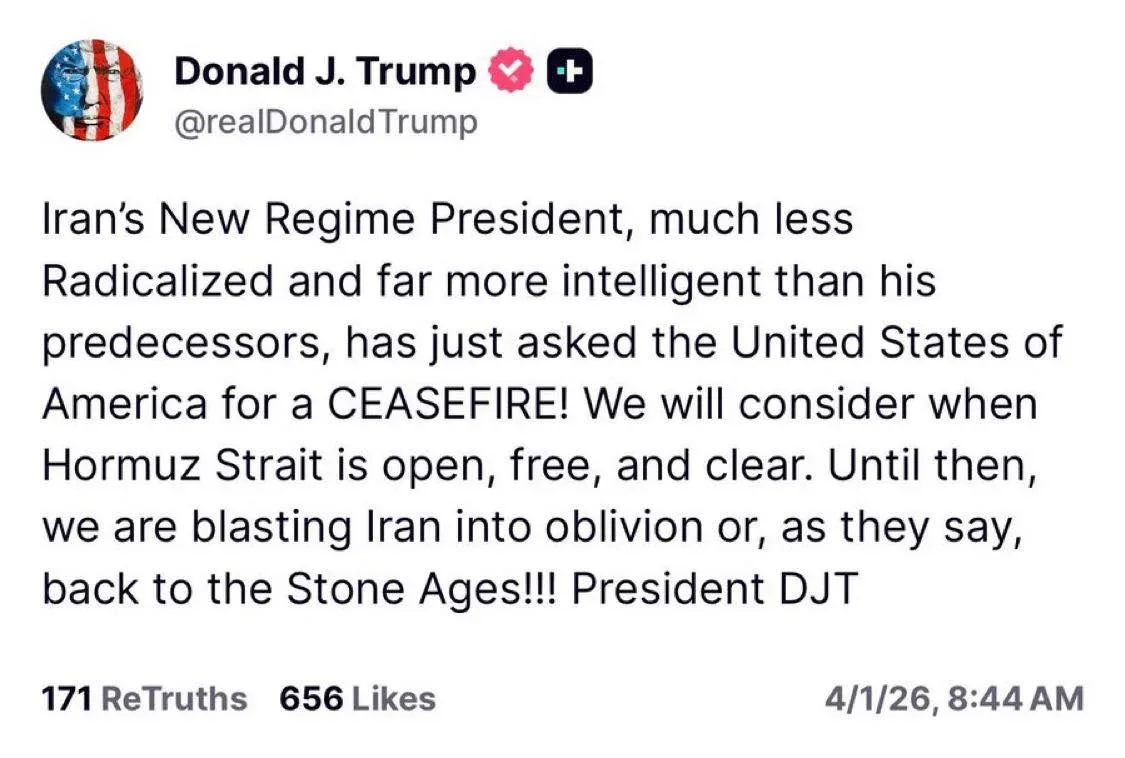
WASHINGTON — President Donald Trump said on April 1 that Iran has proposed a ceasefire, but the US has not accepted it and is demanding the complete reopening of the Strait of Hormuz before consideration.
In a post on the Truth Social platform, Trump said Iran’s new leaders requested a ceasefire, describing them as “less ideological and smarter” than their predecessors.
However, he emphasized that the US position remains unchanged, especially since the escalating hostilities and the reasons why President Trump rejected a ceasefire were clarified previously.
Washington will only consider a ceasefire when the Strait of Hormuz is “open, free, and clear.”
Trump also stated that military operations will continue until this condition is met.
Conflict Context and Energy Pressure
This statement comes as the conflict between the US-Israel and Iran enters its second month, with the Strait of Hormuz—the world’s most vital oil transit point—facing prolonged disruption.
About one-fifth of the global oil supply passes through this area, meaning any disruption directly impacts energy prices and international markets; at one point, oil prices surpassed $100 per barrel following consecutive attacks on vessels.
Diplomatic Signals but No Change in Stance
Despite mentioning the ceasefire offer from Iran, President Trump showed no signs of concession.
He affirmed that the campaign’s objective remains focused on eliminating Iran’s offensive capabilities, particularly as the Pentagon assesses that Tehran’s missile and drone capabilities have significantly declined but strict control over the strategic waterway is still necessary.
Observers note that this is the first publicly disclosed diplomatic signal from Iran, but it is not enough to change Washington’s military course at this stage, especially under pressure from US allies demanding more substantive action from Tehran.
Outlook
There has been no independent confirmation from Iran regarding the ceasefire offer.
Future developments will likely depend on:
- the status of control over the Strait of Hormuz
- pressure from global energy markets
- the level of military escalation in the region