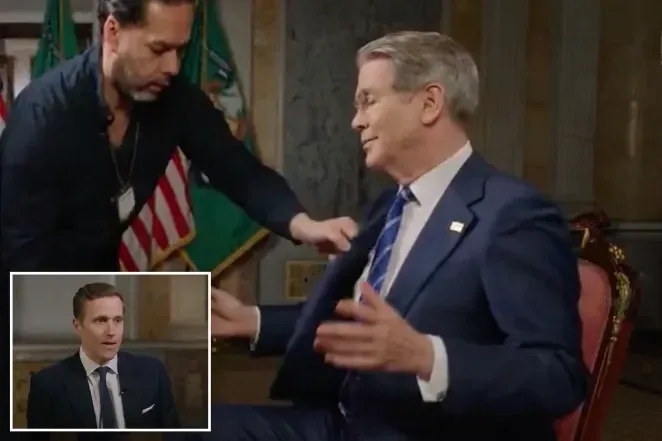
U.S. Treasury Secretary Scott Bessent abruptly left a recorded interview after receiving an urgent notice that President Trump required him in the White House Situation Room immediately.
The incident occurred around 10:22 AM on March 12, while Mr. Bessent was speaking with journalist Wilfred Frost for The Master Investor Podcast at the Treasury Department's Cash Room.
About 13 minutes after the interview began, an aide entered the frame and said:
“The President wants to see you immediately.”
Shortly after, Mr. Bessent's lapel microphone was removed, and he quickly departed the Treasury building.
Urgent meeting lasts nearly two hours
According to Sky News timestamps, the Treasury Secretary returned to the Treasury Department nearly two hours later.
Mr. Bessent stated that the meeting with President Trump covered “many issues,” including next steps in the Treasury's Plan B regarding tax policies, but he did not disclose specific details of the Situation Room discussion.
Iran war has major economic impact
The emergency meeting took place as the U.S. administration manages the economic fallout from the Iran war, which began on February 28, 2026, with military campaign Operation Epic Fury.
According to Mr. Bessent:
- The U.S. Dollar rose sharply during the week
- Global financial markets experienced volatility
- The critical oil shipping route in the Strait of Hormuz has become a flashpoint
The Iranian regime has used the strait as a strategic leverage tool against adversaries. In response, Washington has continuously imposed sanctions on the oil shadow fleet and Tehran's missile network to cut off financial resources for the war.
U.S. considers escorting ships through the Strait of Hormuz
The Treasury Secretary stated that the U.S. Navy could escort international commercial vessels through the Strait of Hormuz when military conditions permit.
He said:
“As soon as military conditions allow, the U.S. Navy – possibly with an international coalition – will escort passing vessels.”
Recent reports on U.S.-Iran hostilities show that tensions in the region have yet to cool down. U.S. officials previously feared Iran might plant sea mines, but no evidence has been found so far.
Campaign costs reach $11 billion
According to Mr. Bessent, the current military operation has cost approximately $11 billion.
He said President Trump views this cost as necessary to ensure security, despite controversies regarding the risk of depleting U.S. weapon stockpiles and budget pressures weighing on the government.