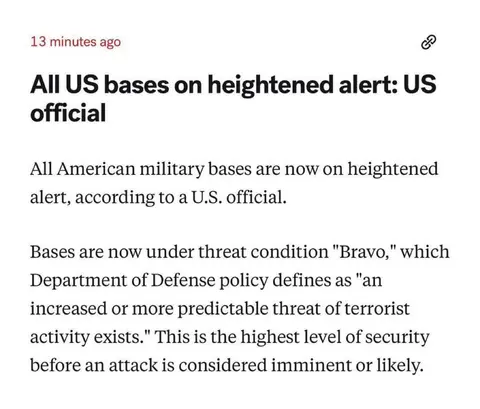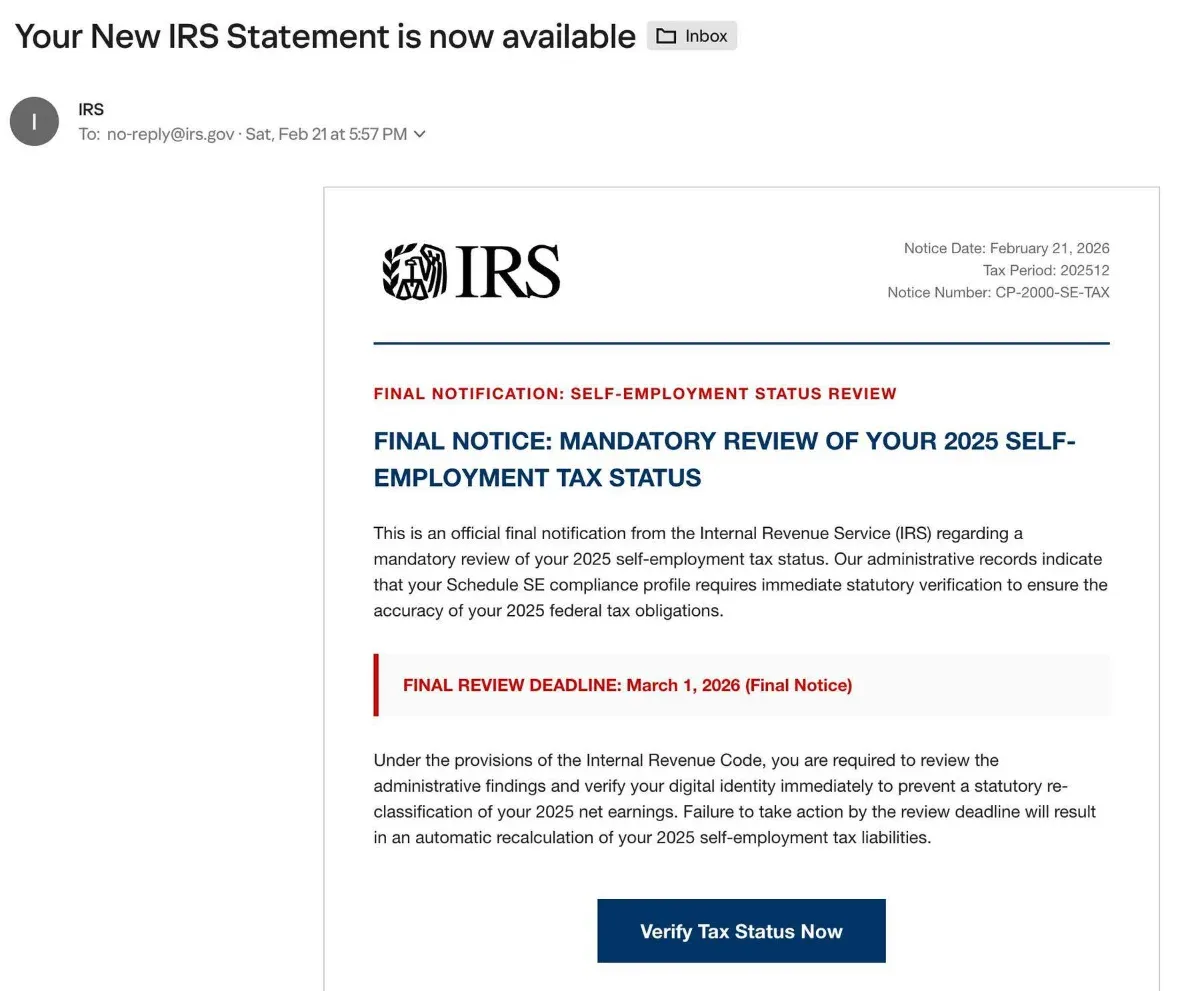
A series of fraudulent emails impersonating the Internal Revenue Service (IRS) is currently circulating, aiming to steal taxpayers' personal information. These emails often use eye-catching subject lines such as "Your New IRS Statement is now available" or notifications regarding a mandatory review of 2025 self-employment tax status.
Scammers typically employ high-pressure tactics by labeling messages as a "Final Notice" with specific deadlines to create a sense of urgency, similar to recent large-scale financial fraud cases. Recipients are prompted to click a Verify Tax Status Now button and are threatened with immediate tax recalculations if they fail to follow the instructions.
According to official IRS guidelines, the agency never sends emails to request personal information, Social Security numbers (SSN), or bank account details. Typically, the IRS makes initial contact through official United States mail rather than electronic methods to prevent illegal misappropriation of the federal budget.
Potential Risks from Fraudulent Links
Accidentally clicking on links within phishing emails can result in malware being installed on phones or personal computers. This leads to a high risk of identity theft, loss of control over financial accounts, and the disclosure of other sensitive information.
To protect themselves, experts advise the public to never click on any links or download attachments from unknown sources, especially following the announcement of a multi-state fraud investigation in DeKalb County. If you receive a suspicious email, take the following safety measures:
- Do not reply to the email and do not provide any personal information.
- Forward the suspicious email to: [email protected].
- Permanently delete the email from your inbox after reporting it to the authorities.
Advice from Federal Officials
When you need to check your tax status, personal records, or review property tax bills, you should manually type the official website address irs.gov into your browser. Accessing the site directly ensures you are dealing with the government agency rather than through risky intermediary links.
Federal officials warn that government impersonation scams tend to increase significantly during tax season. The Vietnamese community in Atlanta and across the United States is encouraged to share this information with friends and family to avoid falling victim to cybercrime.