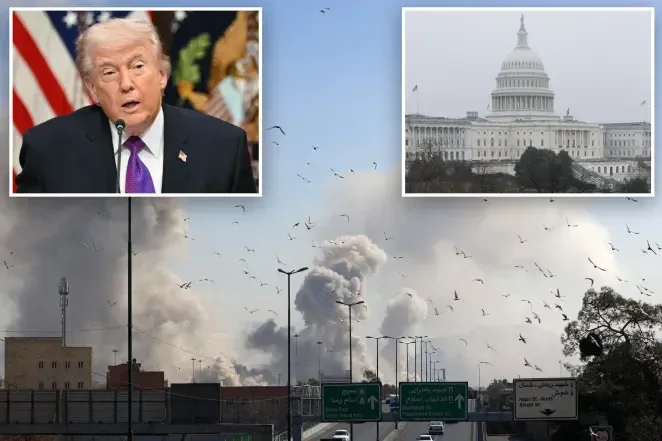
The US House of Representatives is scheduled to vote on March 5, 2026, on a resolution regarding President Trump's war powers amidst the ongoing US military campaign in Iran. The vote comes just one day after the Senate rejected a similar resolution, signaling a level of support for the Trump administration's campaign.
Previously, the US Senate voted 47–53 to reject a resolution limiting war powers proposed by Senator Tim Kaine (Virginia) and supported by Senator Rand Paul (Kentucky). The resolution required President Trump to withdraw US forces from military operations related to Iran unless formal Congressional approval was granted.
US Evacuates Citizens from the Middle East
Meanwhile, the US State Department reported that nearly 20,000 US citizens have returned home since the military campaign against Iran began on February 28, 2026.
According to State Department spokesperson Dylan Johnson, this figure does not include US citizens who have left the region for other countries or are currently en route to the US. The State Department is organizing charter flights and ground transportation to assist citizens in leaving the region. US citizens in Bahrain, Israel, Kuwait, Qatar, Saudi Arabia, and the United Arab Emirates are encouraged to register their information to receive travel instructions.
It is estimated that over 1 million US citizens were in the Middle East when the military campaign began, and many have faced difficulties leaving due to commercial airlines canceling numerous flights.
Pentagon Emphasizes Regional Security Priorities
On the same day, Secretary of Defense Pete Hegseth spoke at the US Southern Command in Florida, emphasizing that the Trump administration is prioritizing the protection of US interests and security in the Western Hemisphere.
Mr. Hegseth stated that the administration is restoring a security approach in the spirit of the Monroe Doctrine to prevent strategic rivals from expanding their influence in the region, while asserting that US forces in the Middle East are ready for high-intensity combat scenarios.
President Trump Discusses Iran's Future Leadership
In an interview on the same day, President Trump expressed his desire to have a voice in choosing the next leader of Iran after Supreme Leader Ayatollah Ali Khamenei was killed in previous strikes.
He also suggested that Mojtaba Khamenei, the son of the late leader, is not a suitable choice for Iran's new leadership, particularly as Democrats strongly oppose the campaign and are demanding urgent Congressional intervention.