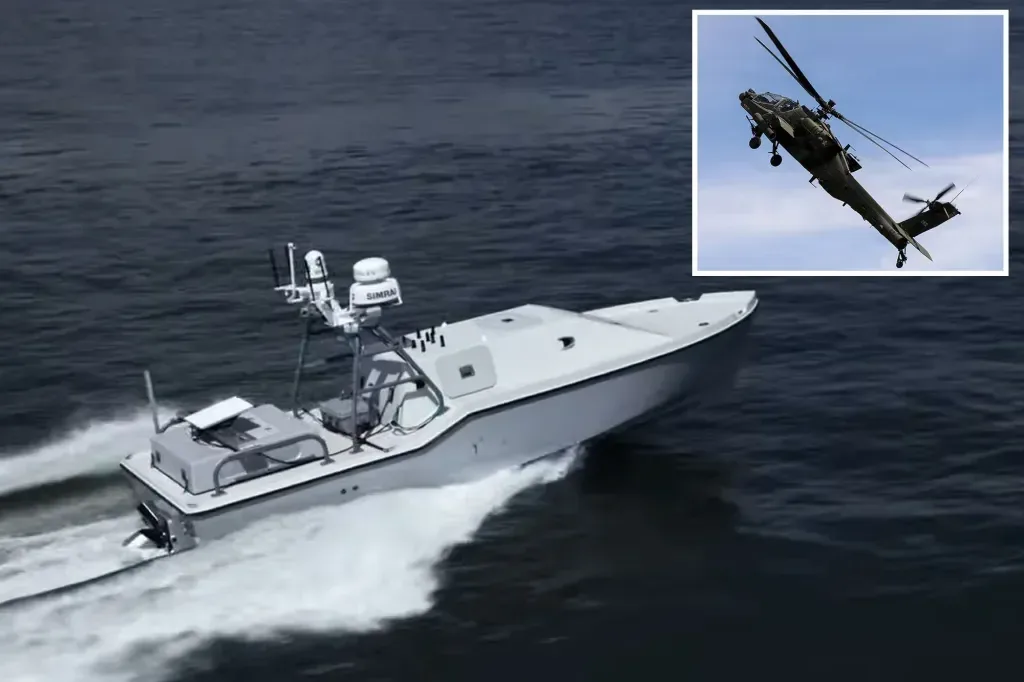
A U.S. Navy uncrewed vessel utilizing artificial intelligence (AI) performed its first real-world rescue mission, successfully saving the crew of a U.S. Army Apache helicopter after it crashed near the Strait of Hormuz on June 9.
According to information reported by the Wall Street Journal, the autonomous vessel located the trapped pilots at sea off the coast of Oman within approximately two hours before bringing them safely to shore.
This incident marks the first time a U.S. Navy uncrewed vessel deployed in the Middle East has directly participated in a search and rescue operation.
Military officials are currently investigating the cause of the helicopter crash. One hypothesis being considered is the possibility that the helicopter was attacked by Iranian forces, amidst ongoing tensions around the Strait of Hormuz.
The rescue vessel is part of Task Force 59, a unit specializing in operating uncrewed systems and AI platforms for the U.S. Navy in the Middle East.
In recent years, the U.S. Navy has accelerated the development of various Medium Uncrewed Surface Vessels (MUSVs), such as:
Sea Hunter
Seahawk
Ranger
Mariner
USX-1 Defiant
These vessels operate as remote sensing platforms, expanding maritime surveillance capabilities, target detection, and supporting crewed ship operations.
According to U.S. Navy Captain Garrett Miller, commander of Surface Development Group ONE, the U.S. Navy expects to possess 11 MUSVs by 2027.
In addition to larger vessels, the U.S. also operates numerous smaller autonomous vehicles, such as:
Global Autonomous Reconnaissance Craft (GARC)
Saildrone Voyager
Autonomous Low-Profile Vessel
This event demonstrates that uncrewed systems are not only useful for reconnaissance and surveillance but can also directly participate in life-saving rescue operations in real combat environments.