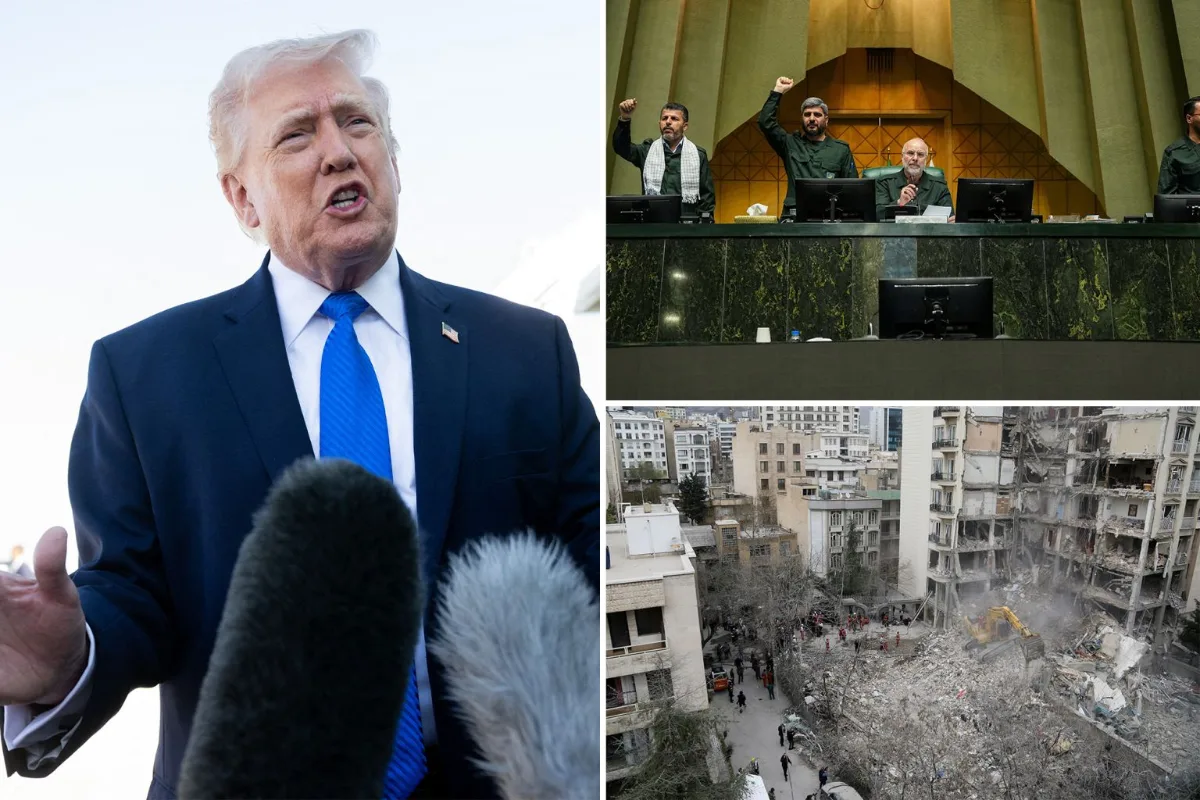
President Trump stated: “They have agreed. They will never possess nuclear weapons.”
According to the New York Times, the plan was delivered to the Iranian side through Pakistan. Envoy Steve Witkoff and Jared Kushner are pushing for a one-month ceasefire to allow both sides to negotiate the detailed terms.
Key points of the 15-point plan
The U.S. side issued requirements for Iran including:
1. Dismantling all existing nuclear capabilities
2. Committing to not developing nuclear weapons
3. No uranium enrichment on its territory
4. Transferring enriched uranium to the IAEA
5. Dismantling the Natanz, Isfahan, and Fordo facilities
6. Allowing full IAEA access
7. Abandoning the strategy of using proxy forces
8. Ceasing funding and arming of related groups
9. Ensuring the Strait of Hormuz remains open
10. Limiting the missile program in range and quantity
11. Using missiles only for defensive purposes
The requirement to dismantle nuclear facilities is key, as President Trump previously stated he had not yet considered deploying ground troops if Tehran cooperated voluntarily. At the same time, opening maritime transport is also emphasized to alleviate the rising tensions around the Strait of Hormuz caused by recent attacks.
In return, Iran could receive:
12. Lifting of international sanctions
13. Support for the development of a civilian nuclear program
14. Abolition of the automatic snapback mechanism for sanctions
Reaction from Iran
Iran has not yet confirmed acceptance of these conditions. According to the Wall Street Journal, Tehran has issued its own demands including:
• Closing all U.S. military bases in the Gulf region
• Compensation for war damages
• Charging fees for ships passing through the Strait of Hormuz
• Commitment against the recurrence of hostilities
• Ending Israeli attacks on Hezbollah
• Lifting all sanctions
• Maintaining its missile program without negotiation
A U.S. official described these demands as “unrealistic.”
Indirect negotiations, hostilities continue
The exchanges are taking place through intermediaries, with Pakistan, Egypt, and Turkey serving as links. Pakistan suggested holding talks in Islamabad.
Meanwhile, military operations continue. A U.S. government spokesperson said Operation Epic Fury would continue until its goals are met, even as many world leaders call for a de-escalation to prioritize diplomacy.
Sources say the Department of Defense is preparing to deploy approximately 3,000 soldiers from the 82nd Airborne Division to the Middle East should negotiations fail. Currently, U.S. forces in the Middle East are ready for high-intensity operations if ordered by the White House.
President Trump assessed that the possibility of a deal still exists, suggesting that the Iranian side is “making a lot of sense.”