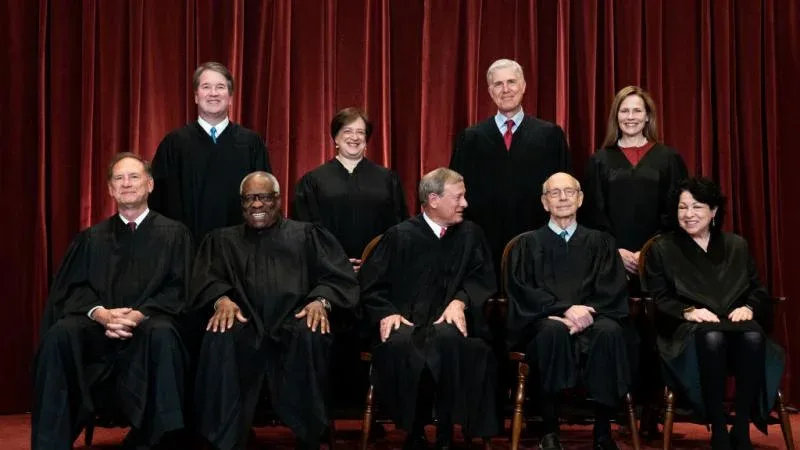
The lawsuit, titled Noem v. Al Otro Lado, centers on a policy implemented during Trump's presidency that allows officials to limit the processing of asylum applications for individuals still in Mexico, who are not yet considered to have "arrived" in U.S. territory.
The Immigration and Nationality Act of 1990 stipulates that individuals who "arrive in the U.S." have the right to apply for asylum. However, the controversy focuses on the definition of what constitutes "arriving."
Justice Amy Coney Barrett questioned the legal boundaries of this concept, while Justice Brett Kavanaugh suggested that the definition of "standing at the threshold" remains unclear.
Chief Justice John Roberts used an analogy: someone standing at the back of a long line cannot yet be considered to have "arrived."
Conversely, Justices Sonia Sotomayor and Ketanji Brown Jackson raised concerns that this policy could create a paradox where illegal entrants have an opportunity to seek asylum, while those waiting through the proper process are turned away.
Government attorney Vivek Suri argued that the "metering" policy helps control flow at ports of entry, allowing authorities to turn individuals away when overwhelmed and ask them to return later.
He emphasized that this is a necessary tool for efficient border management.
The policy is not currently in effect due to the border being closed, but the administration wants to retain the right to implement stricter immigration regulations as needed.
The Court is expected to issue a final ruling in June 2026.