US Forces Ready for High-Intensity Campaign
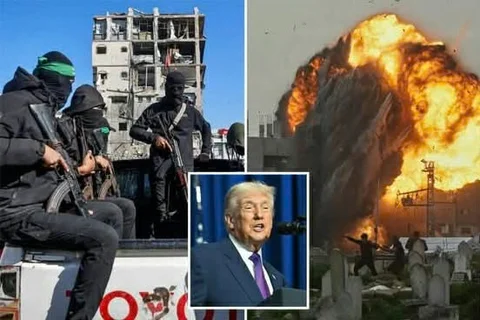
US forces in the Middle East are ready for a high-intensity military operation against Iran if President Trump makes the political decision, according to a former senior Pentagon official.
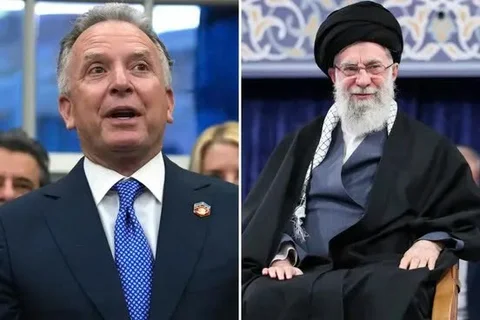
Dana Stroul, now Research Director at The Washington Institute for Near East Policy, made this assessment as Washington and Tehran prepared for their second round of indirect nuclear talks in Oman on February 26.
Stroul told Fox News Digital that the US military is prepared for a sustained, high-level operational campaign, while also capable of defending Middle Eastern allies against Iranian missiles. She emphasized that the US can redeploy forces from various regions worldwide and deploy superior firepower within a short period.
Expanded Offensive and Defensive Capabilities
According to Stroul, this latest reinforcement expands both offensive and defensive capabilities compared to the June 2025 airstrikes targeting Iran-related nuclear facilities. At that time, the US conducted limited and clearly targeted strikes to degrade nuclear infrastructure without triggering a regional war.
Two Aircraft Carriers Operating in the Region
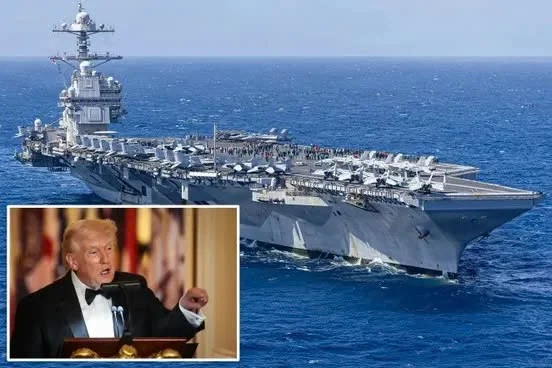
Currently, two US aircraft carriers, the USS Gerald R. Ford and the USS Abraham Lincoln, are operating within the US Central Command (CENTCOM) area of responsibility. One vessel may be in the Eastern Mediterranean, while the other is in the Persian Gulf. Stroul noted that the redirection of the Ford — which was on its way home — back to the region demonstrates significant strategic importance.
She assessed that the presence of two carrier strike groups provides a clear deterrent leverage. Additionally, the US has increased the number of guided-missile destroyers, fighter jets, refueling aircraft, and air defense systems in the region.
Iran's Conventional Military Capabilities Are Inferior
Stroul believes Iran combines military deterrence signaling with negotiation efforts to de-escalate the situation. She noted that Iran is inferior in conventional military capabilities. According to her, Israel once controlled Iranian airspace for a day last year, attacking several security commanders and destroying about half of the country's missile inventory; the US has also significantly slowed Iran's nuclear program.
Iran's Proxy Network Weakened
Iran's network of proxy forces in the region, including Hezbollah and Shiite militia groups in Iraq and Syria, has been weakened after prolonged Israeli military operations. Stroul believes Iran cannot rebuild a decades-long project in just a few months.
She concluded: military capability is not the issue; the decision lies at the political level.