
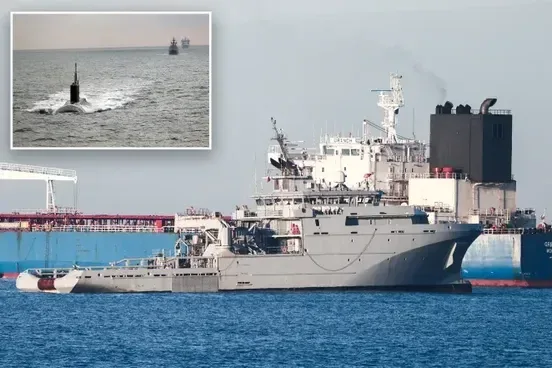
Approximately 800 oil tankers believed to belong to Russia's "shadow fleet" have transited through the English Channel, raising alarms about the risk of military confrontation in NATO waters. This activity occurs amid sustained high tensions between Russia and NATO.
The Royal Navy is increasing monitoring of ships sanctioned by the U.S. and allies as they pass through one of the world's busiest shipping lanes. The heightened surveillance measures aim to ensure regional security and compliance with international regulations.
Details of Tracked Cases
This month, three vessels — Rigel, Hyperion, and Kousai — were tracked while carrying sanctioned crude oil. The Rigel, flying a Cameroonian flag and measuring 885 feet long, departed Russia's Primorsk port on February 2 carrying approximately one million barrels of oil worth an estimated $55 million. Despite being sanctioned by the UK, European Union, and Canada, the vessel still has the right of "innocent passage" under international maritime law.
The Kousai, flying a Sierra Leone flag, also departed from Ust-Luga port the same day and was required to provide proof of insurance within 24 hours. Meanwhile, the Hyperion, sanctioned by the U.S., had changed its flag after delivering oil to Venezuela in an attempt to conceal ownership.
Broader Surveillance and Expert Warnings
Beyond oil tankers, the Royal Navy recently closely tracked a Russian Kilo-class submarine as it transited through the English Channel during a three-day NATO coordination mission. The UK Ministry of Defence reported it has sent proof-of-insurance requests to more than 600 suspected vessels since October 2024.
Professor Michael Clarke noted that the possibility of a military confrontation at sea this year in the English Channel or the North Sea cannot be ruled out if the UK and allies tighten measures against Russian vessels. The U.S. has also taken its own actions, seizing at least seven vessels linked to sanctioned oil transactions since December 2025.
The situation continues to be closely monitored amid the prolonged Russia-Ukraine conflict, underscoring the complexity and tension of maritime activities in the region.