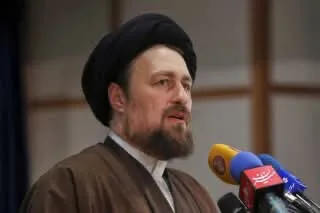
Hassan Khomeini: A Potential Face to Succeed Iran's Supreme Leader
Following the death of Supreme Leader Ayatollah Ali Khamenei in a U.S.-Israeli strike, Tehran's political landscape is entering a period of significant volatility. Among the figures being considered for succession, Hassan Khomeini—grandson of the late Ayatollah Ruhollah Khomeini—has become a name of particular interest. He not only carries the bloodline of the Islamic Republic's founder but also holds great prestige among the clergy.
Hassan Khomeini, currently 53, is regarded as a moderate with a more innovative mindset compared to other rivals in the power struggle. He maintains close relationships with reformist politicians such as former Presidents Mohammad Khatami and Hassan Rouhani. These are individuals who previously sought to promote dialogue and ease tensions between Iran and Western nations.
Symbolic Role and Political Standing
Although he has never held administrative government positions, Hassan Khomeini possesses an immensely important symbolic role. He directly oversees his grandfather's mausoleum in southern Tehran, a sacred position within the Iranian political system. Some observers believe he could serve as a potential counterweight to Mojtaba Khamenei, the son of the late leader Ali Khamenei, who belongs to the hardline faction.
Given the widespread unrest earlier this year, a segment of Iran's political elite believes that choosing a moderate leader is essential. This is expected to help soothe the wave of public discontent and strengthen the stability of the political system. Hassan Khomeini is seen as a figure capable of bridging different schools of thought to maintain national unity.
While always affirming his loyalty to the Islamic Republic, Hassan Khomeini has frequently expressed independent views and support for reform. In 2021, he drew attention by strongly criticizing the Guardian Council for disqualifying reformist candidates from the presidential election. He opposed the imposed selection process, which he argued undermined democracy and the people's right to choose.
“You cannot choose someone for me and then tell me to go vote for them,” he once bluntly stated regarding the Guardian Council's candidate screening process.
Currently, the political situation in Iran is entering a highly sensitive and unpredictable transition phase. The final decision on the successor will rest with high-ranking clerics and the Assembly of Experts. Following the recent military upheavals, developments in Tehran are being closely monitored by the international community, as the outcome will determine Iran's future on the global geopolitical map.