Reporting Date: March 20, 2026
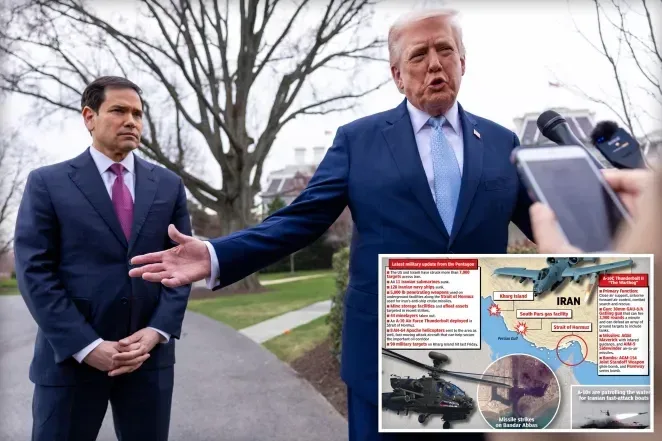
President Trump affirmed his refusal to accept a ceasefire with Iran, while suggesting the Strait of Hormuz could "open itself" without significant military action.
Speaking to the press on March 20, President Trump argued there was no reason for a ceasefire while the adversary suffered heavy losses. He stated that from a military standpoint, Iran is "finished."
The Strait of Hormuz has been disrupted for three weeks, driving global oil prices up as tensions around the Strait of Hormuz escalate. Tehran claimed use of the area as strategic leverage against the U.S. and Israel.
President Trump noted that reopening this maritime route would only require a simple military move, and might not even necessitate direct action.
He also criticized NATO and allies for not providing support, though he believed they could contribute to resolving the situation.
In an interview the same day, President Trump assessed the damage in Iran as so severe it would take about 10 years to recover. If the campaign continues, recovery might become impossible.
President Trump emphasized that the primary goal is not regime change but preventing Iran from obtaining nuclear weapons.
The status of Iran’s 60% enriched uranium remains unclear, while this level could be rapidly increased for nuclear weapons manufacturing.
In parallel, the Pentagon is deploying more forces to the Middle East. An amphibious task group consisting of three ships with approximately 2,500 Marines departed San Diego for the region.
Another similar group has moved from Asia and is expected to reach waters near Iran by late March.
President Trump has not ruled out deploying forces to control the Strait of Hormuz or taking control of Kharg Island—the hub for most of Iran's oil exports.
The continuous troop deployments follow the launch of a joint military campaign by the U.S. and Israel in late February.
The Pentagon has not issued an official comment on the new deployments.