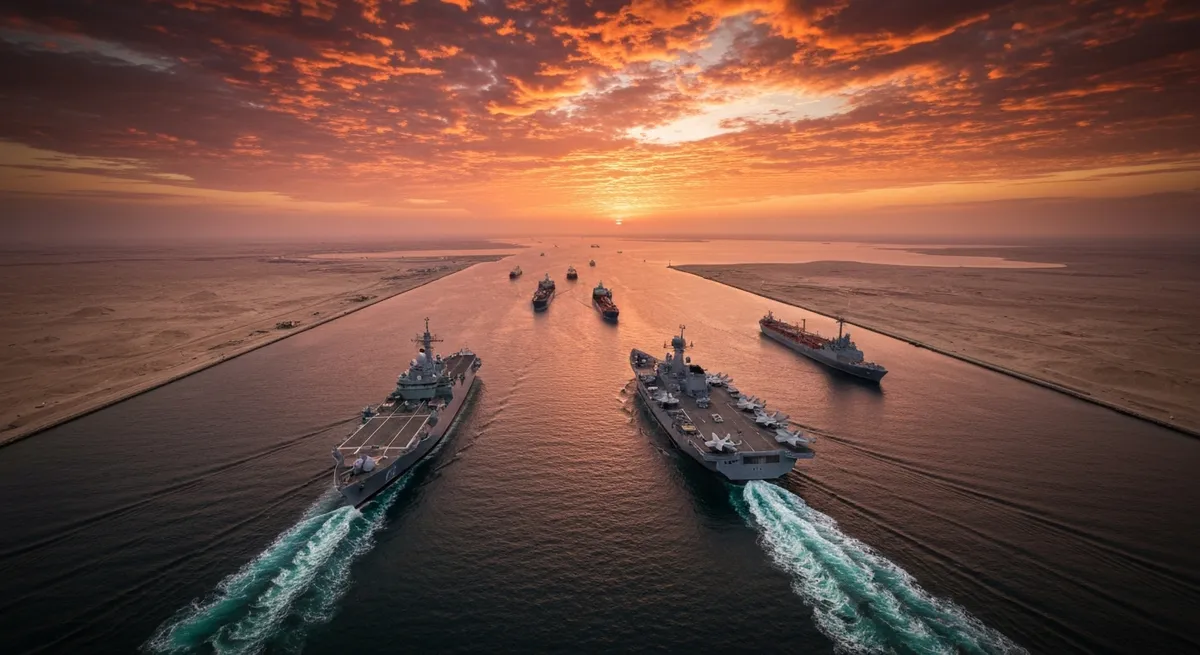
WASHINGTON, D.C. – The White House issued a stern message that Iran would be "very wise" to reach an agreement with President Trump, as Tehran conducted naval exercises with Moscow in the Strait of Hormuz and the Gulf of Oman — a region through which approximately one-fifth of the world's seaborne crude oil is transported annually.
US Increases Military Presence
White House spokeswoman Karoline Leavitt affirmed that President Trump always prioritizes diplomacy, but emphasized that there were still "many reasons" why an attack on Iran would be considered.
"Iran would be very wise to reach a deal with President Trump and this administration," Leavitt told reporters.
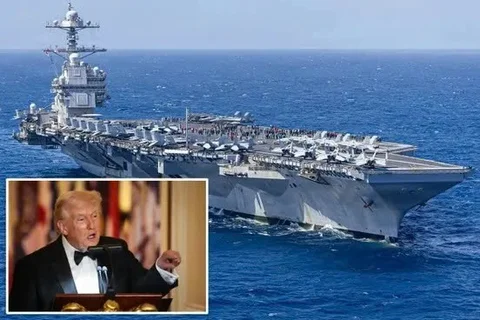
The US deployed the supercarrier USS Gerald R. Ford to the Middle East, joining the existing formation alongside the USS Abraham Lincoln and other warships already present in the region.
According to CNN, military plans targeting Iran could be activated as early as this weekend, although a final decision has not yet been made.
Iran – Russia Drills in Oil Chokepoint
Iran and Russia have conducted annual naval drills since 2019. This round of exercises took place in the Strait of Hormuz and the Gulf of Oman.
Iranian Rear Admiral Hassan Maqsudlu stated that the goal was to "prevent any unilateral actions in the region."
Supreme Leader Ali Khamenei posted on social media that Iran possesses weapons capable of sinking US warships — a statement seen as a direct response to warnings from Washington.
Negotiations Continue Amid Significant Gaps
US and Iranian delegations held their second round of talks in Geneva on Tuesday. Iranian Foreign Minister Abbas Araghchi reported "good progress," while the US side expressed cautious optimism.
However, the White House stated that the two sides were still "very far apart" on several issues, particularly concerning the nuclear program, ballistic missile systems, and Iran's support for armed groups in the region.
Russia's Role is Symbolic
An Iranian naval officer remarked that Moscow's participation was "small" and "symbolic," suggesting Russia would be unlikely to intervene directly if a US-Iran confrontation occurred.
As Russia remains bogged down in the conflict in Ukraine, many observers question Moscow's readiness to support its partners if the situation escalates.
The situation in the Middle East continues to be tense, as the US increases its military presence while Iran enhances cooperation with Russia. President Trump's decisions in the coming days are seen as a key factor in shaping the regional landscape.